
WW, formerly known as Weight Watchers, recently launched a brand-new program and people are freaking out about it. If you have never done WW before, it’s a widely successful diet plan that has been around since the 1960s made popular by their flexible point system. So, what makes WW’s new plan different from its old one?
Weight Watcher’s PersonalPoints program is their most individualized and customizable program yet. Replacing the old SmartPoints point system, PersonalPoints is based on goals and anthropometrics. The new WW program is not just about diet, but it also emphasizes other important lifestyle factors for weight loss and overall health such as sleep, exercise, and stress management.
Feeling intrigued by these new changes? You are not alone. Let’s take an in-depth look into the new WW program, how it’s different from their previous programs, and other common questions about their new launch.
Contents
- What is the new Weight Watchers Program?
- PersonalPoints vs. SmartPoints
- Which Foods are Zero Points on Weight Watchers?
- Weight Watchers Foods and Their Points
- How Many Weight Watchers Points are you Allowed a Day?
- How Do I Calculate How Many Weight Watchers Points I Get?
- How to Track PersonalPoints
- Weight Watchers vs. Noom vs. MyFitnessPal
- Weight Watchers vs. Noom
- Weight Watchers vs. MyFitnessPal
- Is There a Free Version of Weight Watchers?
What is the new Weight Watchers Program?
The new WW program, known as the PersonalPoints program, is a customizable plan that incorporates foods you love to make weight loss easy. When you sign up for the program, you are assessed on your food and activity preferences. WW then uses its nutritional algorithm to help generate an individual plan for weight loss.
Instead of choosing from various programs that have standard numbers of SmartPoints and ZeroPoint foods, the PersonalPoints program generates your own points budget and ZeroPoint food list. These are based on your preferences and specific needs to make eating healthy a lot more sustainable.
WW’s updated nutritional algorithm emphasizes high fiber and unsaturated fat foods as well as natural sugars over added sugars. You can also earn extra points by performing good behaviors, such as meeting your water goal, increasing non-starchy vegetables, and adding in exercise.
WW’s new PersonalPoints program takes on a whole health focus, instead of just diet. Their new program features an emphasis on other healthy lifestyle habits, such as exercise, sleep, mental health, and more. Further, their new program aims to emphasize overall health while making small, sustainable changes to meet their weight loss goals.

PersonalPoints vs. SmartPoints
SmartPoints, the old point system from WW, has been replaced by their new PersonalPoints program. Along with the name change, the points themselves have also changed. The point value of foods increases with added sugars and saturated fats and decreases with protein, fiber, and unsaturated fats. Many of their previous SmartPoint foods have also changed in their number of points.
Instead of having 3 programs with different points for participants to choose from, the new WW program provides customized SmartPoints based on your goals and anthropometrics. Many WW enthusiasts are a big fan of this change as it allows for more flexibility in eating for higher sustainability. You also have more options to earn more PersonalPoints by practicing healthy habits.

Which Foods are Zero Points on Weight Watchers?
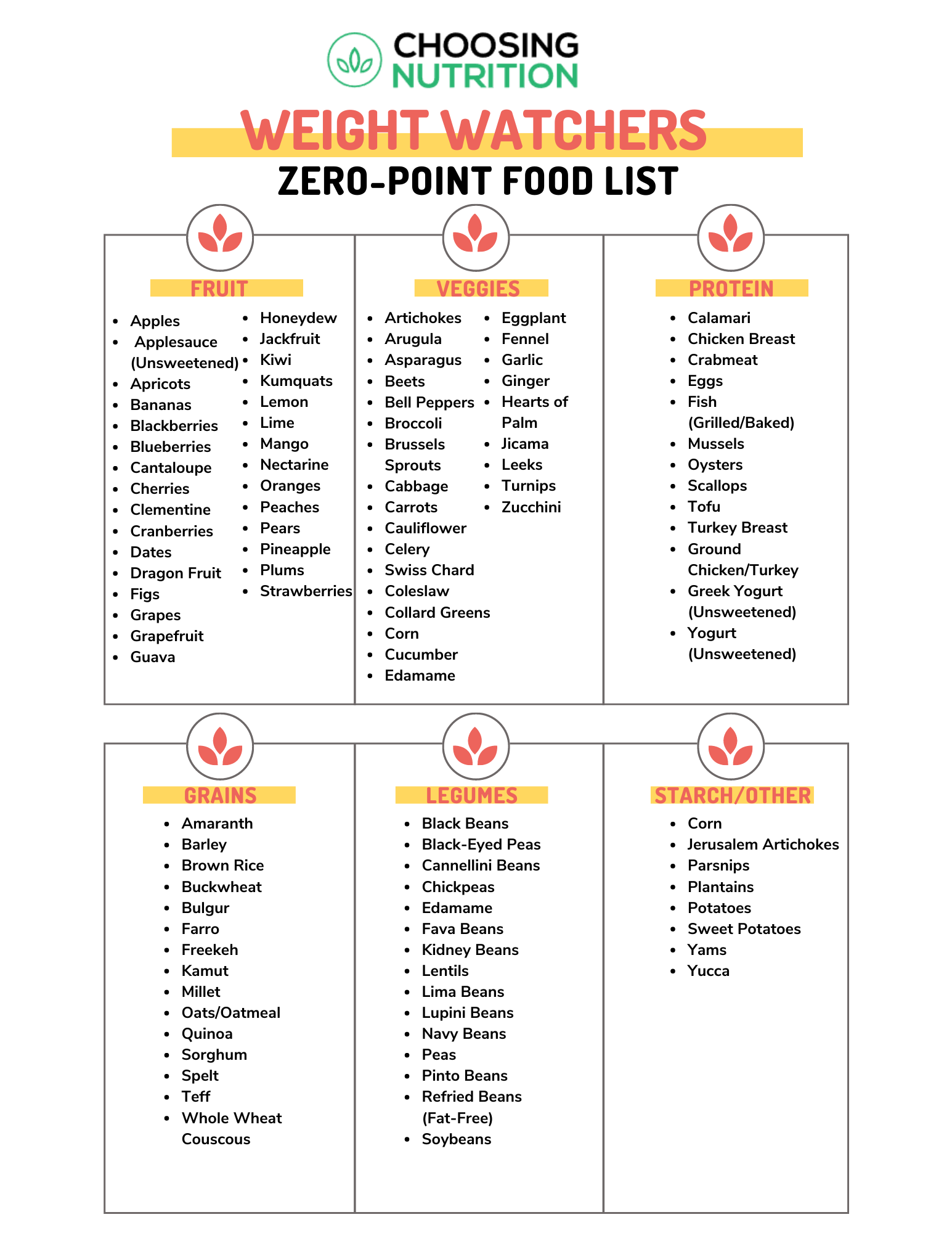
With WW’s PersonalPoints program, you are provided your very own ZeroPoint foods list that includes your food preferences. WW’s ZeroPoint foods are chosen with your goals and favorite foods in mind. ZeroPoint foods include foods that are rich in lean protein, fiber, and healthy fats. These foods are rich in nutrients and support a healthy diet. They also help you to feel full quicker and for longer, what’s not to love?
Your ZeroPoint food list will be different from someone else’s. For the first time, WW is incorporating a more individualized approach starting with your PersonalPoints and ZeroPoint foods.
This means those ZeroPoint foods will include many of those that you enjoy, making it easier for you to incorporate more of those into your diet without using all your PersonalPoints.
How Many ZeroPoint Foods Can I Eat?
WW’s ZeroPoint foods don’t need to be weighed or measured as your PersonalPoints foods do. In fact, you can eat as much of them as you want, and they won’t affect your PersonalPoints at all. The aim behind ZeroPoint foods is to encourage more of these in the diet and save your points for foods you wish to consume in more moderation.
For example, many ZeroPoint foods will include fruits, vegetables, whole grains, and lean meats. You can eat as much of these as your heart desires while those PersonalPoints are saved for higher-calorie foods or those that we want to moderate, such as potato chips or sweets.
Weight Watchers Foods and Their Points
Still feeling unsure about WW’s new PersonalPoints program? Below is an example of the types of foods you can expect to find with higher points versus those with zero or low points during the program. Remember, there are thousands of different foods out there and they all may fall into different points categories.
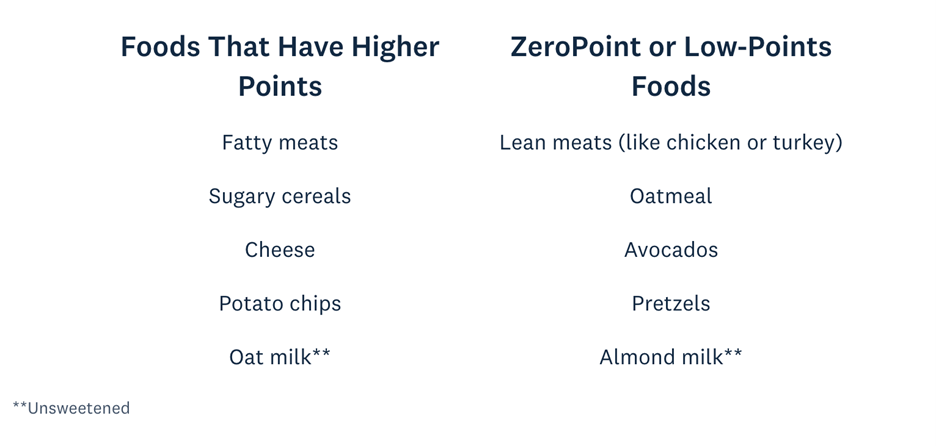
When trying to determine how many points a food might have, consider the number of added sugars and saturated fats. The higher these numbers the higher the points for these foods. If you have a WW PersonalPoints membership, you can find out the point value of a food by entering the nutrition information into your WW calculator.
How Many Weight Watchers Points are you Allowed a Day?
The number of WW PersonalPoints you are allotted daily will vary from person to person. Unlike their old plans where you chose your number of SmartPoints and available ZeroPoint foods, WW’s new PersonalPoints plan generates available points based on the information you provided for your goals and anthropometrics.
How Do I Calculate How Many Weight Watchers Points I Get?
WW’s new PersonalPoints program uses a PersonalPoints Engine to assess your allotted points based on a series of questions. With this information, their nutritional algorithm comes up with a personalized set of points tailored to you.
If you are not a WW member, you won’t be able to calculate your PersonalPoints as you won’t have access to their algorithm.
How to Track PersonalPoints
You can easily track your WW PersonalPoints on your WW app on your phone.
When you choose a food for a meal or snack, simply enter the food into your WW nutritional calculator. You can do this manually if it’s a new food or recipe, or you can search for a food. You also have the option of scanning the barcode on the package of food for quick tracking.
Once you have a food chosen, simply enter the portion size you plan to eat, and it will deduct any PersonalPoints used for that meal or snack automatically.
Weight Watchers vs. Noom vs. MyFitnessPal
| Program | Weight Watchers | Noom | MyFitnessPal |
|---|---|---|---|
| Price | $22.95+ a month | $59 a month | $9.99 a month |
| Approach | Increasing intake of healthy foods and moderating unhealthy Psychological approach to better understanding your food behaviors and habits Basic approach to weight loss, calorie counting | Psychological approach to better understanding your food behaviors and habits | Basic approach to weight loss, calorie counting |
| Food Tracking | Point system | Color rating system | Basic calorie tracking |
| Common Features | - Online app to track meals - Weight goal setting and tracking - Healthy recipes - Community support | - Online app to track meals - Weight goal setting and tracking - Healthy recipes - Community support | - Online app to track meals - Weight goal setting and tracking - Healthy recipes - Community support |
| Differences | - Community: WW provides access to an extensive community of users to help support each other along with one-on-one coaching and virtual or in-person workshops | - Includes a diet plan developed with input from behavioral psychologist - Regular check-ins to discuss challenges - Fully integrated educational component that focuses on mindfulness, nutrition, and behavior all in one | - Simplicity- easy tracking and chart display allows users to see all their information in one place with at-a-glance reports |
Weight Watchers vs. Noom
Noom is another weight loss plan that has become popular over the last few years. Both Noom and WW are well-known commercial weight loss programs with high success rates and there are both similarities and differences between the two.
Where WW uses a point system to track foods, Noom uses a color-coded system. Both programs have a high success rate for short-term weight loss and access to support from a coach. However, Noom makes this more available than WW, which does require a higher cost plan to have similar benefits.
Noom takes a psychological approach to diet so you can better understand how your daily habits and emotions affect your food choices. Their plan includes a weekly check-in with a coach and short daily lessons to help support you along the way.
WW utilizes a point system for their food that encourages healthy choices and moderation. Their programs offer varying degrees of support.
Both programs have shown to be effective with weight loss in the short-term utilizing different approaches. Which program works better will depend on your personal needs.
Noom can be a higher price for a membership depending on which one you choose. Prices vary but can be up to $59 per month.

Weight Watchers vs. MyFitnessPal
MyFitnessPal is a popular food tracking app that has been around since the early 2000s. This app is available free to those who wish to start logging their meals, but if you are looking for more specific recommendations and instructions you are encouraged to purchase a subscription for their Premium upgrade.
Unlike WW, which is a program dedicated to weight loss, MyFitnessPal is focused more on tracking intake to help meet various goals, including weight loss, muscle growth, and even weight gain. MyFitnessPal offers a variety of resources on their online app, including recipes, blogs, and informative articles but as far as encouraging healthy eating, their app doesn’t compare to WW. WW offers a more well-rounded approach to weight loss whereas MyFitnessPal is more of a light guide. You can purchase a subscription for $9.99 a month or $49.99 for a year.
Is There a Free Version of Weight Watchers?
WW’s PersonalPoints plan membership currently costs $22.95 per month with a $20 starter fee. However, they do offer promotions on Fridays called $5 Fridays. On these days, WW offers their 6-month membership for $5 a month for the first 3 months, which adds up to a savings of about $73.85. You can also choose a 3-month membership plan for $5 for the first month, which adds up to a savings of about $37.95. If you are unsure, you can choose to try out WW for 1 month at $9.92 per week.
Although they don’t currently offer a free version of WW’s PersonalPoints program, you can try it out for free for 30-days. Once the 30-days are up, you will be charged the monthly fee unless you choose a different plan or cancel.